
Your Grandma Cooked with a Cast Iron Skillet
AND YOU SHOULD, TOO.
My grandmother had a cast iron skillet that was older than my mother. It lived on her stovetop, seasoned to a glossy black patina from decades of use. She cooked everything in it—cornbread, tacos, vegetables, even desserts.
There's a reason cast iron has been around forever. It works. It lasts. And once you get over the idea that it requires some mysterious level of care, it becomes the most useful piece of cookware in your kitchen.
WHY CAST IRON?
Heat retention.
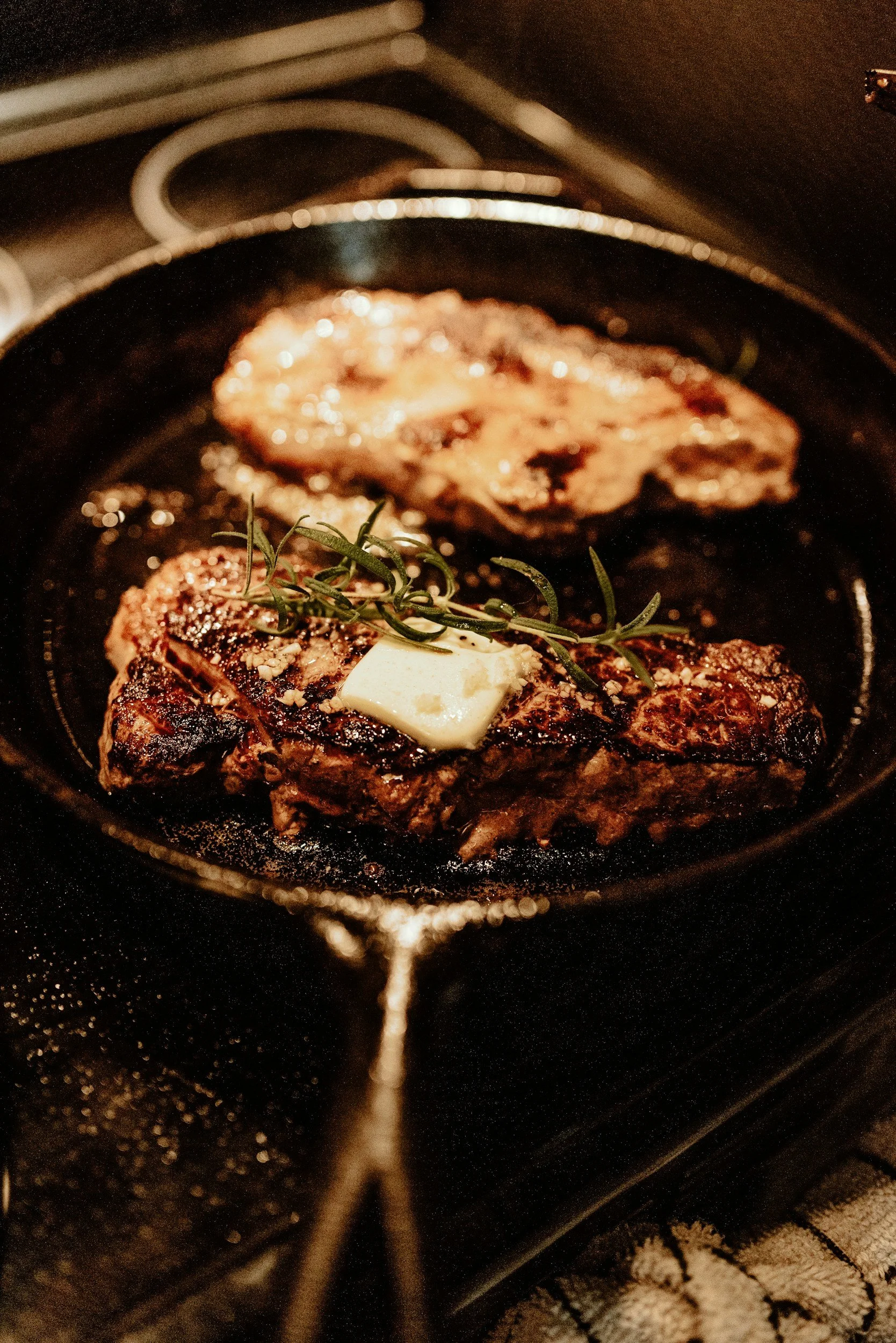
Cast iron holds heat better than anything else. Once it's hot, it stays hot, which means you get better sears on meat, crispier edges on cornbread, and more even cooking throughout. This is especially useful if you're cooking something that needs consistent temperature, like a frittata or a skillet cookie.
Versatility.
Stovetop to oven without switching pans. I use mine for everything from searing steaks to baking cornbread to roasting vegetables. It's the pan I reach for most often because I know it can handle whatever I'm making.
Natural nonstick.
A well-seasoned cast iron skillet is naturally nonstick. No chemicals, no coating that wears off over time. Just layers of oil baked into the iron, creating a surface that gets better with use. Eggs slide right off. Pancakes flip easily. It's genuinely satisfying.
It lasts forever.
Literally. A grandmother's skillet is proof. These things outlive you. They get passed down. A $30 Lodge skillet you buy today could be cooking for your grandchildren someday. That's a level of durability you don't find in most modern cookware.
Adds iron to your food.
Small amounts of dietary iron leach into whatever you're cooking, which is actually beneficial, especially if you're prone to iron deficiency. Not a lot, but enough to matter over time.
HOW TO CLEAN IT (It's Easier Than You Think)
Here's where people get nervous. The internet is full of conflicting advice about cast iron care, and it's honestly overthinking things. My grandmother didn't fuss over hers, and it was perfect. Here's what I do:
After cooking, let the skillet cool slightly but clean it while it's still warm. Sprinkle coarse salt generously across the cooking surface. Use a paper towel or dish brush to scrub under hot running water. The salt acts as an abrasive and helps lift stuck-on food without damaging the seasoning.
Rinse thoroughly. Place the skillet back on the stove over high heat. Let it sit there until all the water evaporates completely. You'll see steam rising, and then it'll stop. That's when you know it's dry.
While the skillet is still hot (use an oven mitt), add a small amount of oil—vegetable, canola, even bacon grease works. Use a paper towel to spread it across the entire surface, including the sides and bottom. You want a thin, even coat, not a puddle. You can even use a cooking spray to coat the surface, if you’re feeling lazy.
Let it cool on the stovetop, then put it away. That's it.
WHAT NOT TO DO
Don't use soap. I know some people say modern dish soap is fine, but why risk it? Salt and hot water work perfectly well.
Don't let it soak. Water sitting in cast iron leads to rust. Clean it right after cooking, dry it immediately.
Don't put it in the dishwasher. Just don't.
GET ONE FOR YOURSELF
Cast iron isn't fancy or trendy. It's practical, reliable cookware that improves with age instead of wearing out. Your grandmother knew what she was doing. If it was good enough for her kitchen, it's good enough for yours.
Start with one skillet. Use it regularly. Clean it simply. Watch it get better over time. That's the whole secret.